
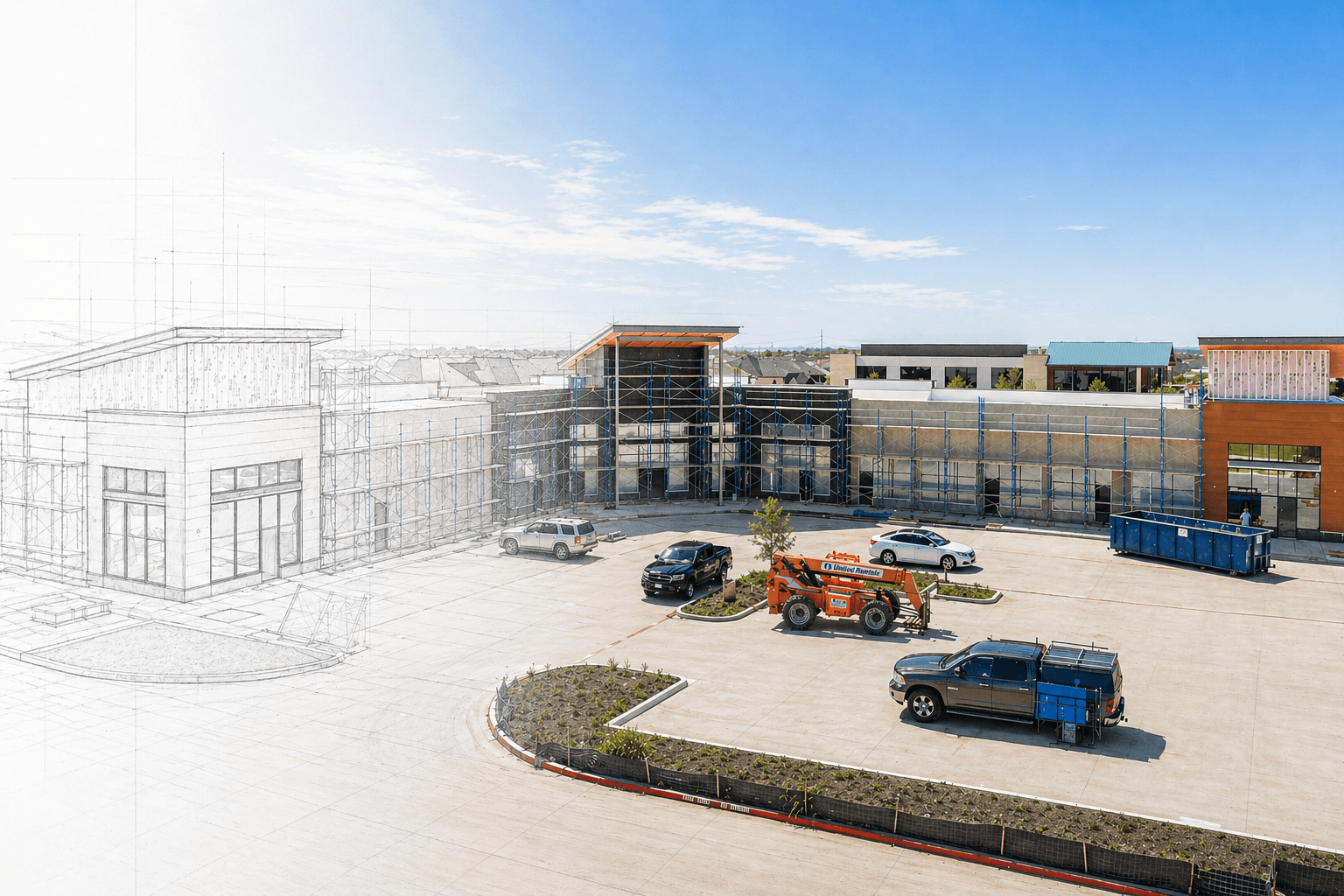

Optimizing Civil Engineering to Save $3M in Earthwork Costs
Discover how advanced civil engineering optimization reduced earthwork volumes and saved an estimated $3M on project costs. Learn proven strategies.
Optimizing Civil Engineering to Save an Estimated $3M in Earthwork Costs
In land development and real estate investment, precise cost control is critical. One of the biggest and most commonly underestimated expenses is earthwork, especially when a site faces drainage or floodplain challenges that seem to require large amounts of imported fill. These costs can escalate quickly and turn an otherwise attractive subdivision into a financially unworkable project.
Recently, we encountered exactly this issue on a residential development. The original civil design called for a very high volume of imported soil. That single assumption was projected to increase the project budget by approximately ~$3M, putting serious pressure on the project's feasibility for both developers and investors.
Step 1: Auditing the Initial Design Assumptions
Instead of accepting the first set of plans at face value a mistake that often leads to major financial losses we initiated a full technical and financial review at TX Sparks Construction.
We:
- Requested the latest topographical drawings
- Obtained updated grading plans
- Reviewed detailed cut-and-fill quantities to see what was truly driving earthwork costs
When the numbers still didn't align with actual site conditions and our field experience, we engaged a specialized, independent engineering team to re-evaluate the design from the ground up.
Step 2: Applying Advanced Engineering and Value Engineering
The updated engineering effort was not just a math exercise; it led to a smarter, more site-responsive design that worked with the natural topography instead of fighting it.
The engineering team implemented:
- New Hydrology & Hydraulics (H&H) Study
To confirm flood protection and drainage performance with the least amount of overdesign and unnecessary fill. - Comprehensive Grading Analysis
Focused on balancing cut and fill, maximizing the use of on-site material, and minimizing the need for expensive imported soil. - Strategic Design Enhancements
Including the introduction of retaining walls and other structural features in targeted locations to achieve required elevations while significantly reducing fill volumes.
Outcome: Measurable Cost Savings and Better Design
The results were substantial and quantifiable:
- Imported fill requirements were reduced by more than 50%.
- This translated into an estimated $3 million reduction in earthwork costs.
- All drainage, safety, and regulatory requirements remained fully compliant and in some cases were improved.
This case clearly shows that the cheapest initial civil design fee does not always produce the most cost-effective construction outcome. A modest investment in value engineering and independent review saved millions in hard construction costs.
Key Lessons for Developers and Landowners
For anyone involved in land development, we recommend treating these principles as standard practice:
- Always verify grading and drainage.
Initial civil reports should be treated as a starting point, not the final word. Independent review especially by teams with real construction experience is essential. - Pay close attention to cut-and-fill quantities.
These numbers are one of the best early indicators of whether a project is financially viable. Highly imported fill should trigger an immediate design audit. - Make value engineering non-negotiable.
Thoughtful engineering adjustments can produce multi-million-dollar savings while preserving or improving technical performance. - Design must be buildable and cost-efficient not just "correct on paper."
The best designs balance compliance, constructability, and financial reality.
At TX Sparks Construction, we combine decades of on-the-ground up construction experience with smart engineering review to protect your budget, reduce hidden earthwork costs, and deliver high-quality, compliant land development projects that make financial sense.
Disclaimer: This article is provided for general educational and informational purposes only and does not constitute professional, legal, financial, or engineering advice. While TX Sparks Construction makes every effort to keep this content accurate and current, we make no warranties as to its completeness, accuracy, or reliability. Construction codes, regulations, and requirements vary by location and project and are subject to change. Any action you take based on this information is strictly at your own risk. For guidance specific to your project, please consult a qualified professional or contact our team directly.