
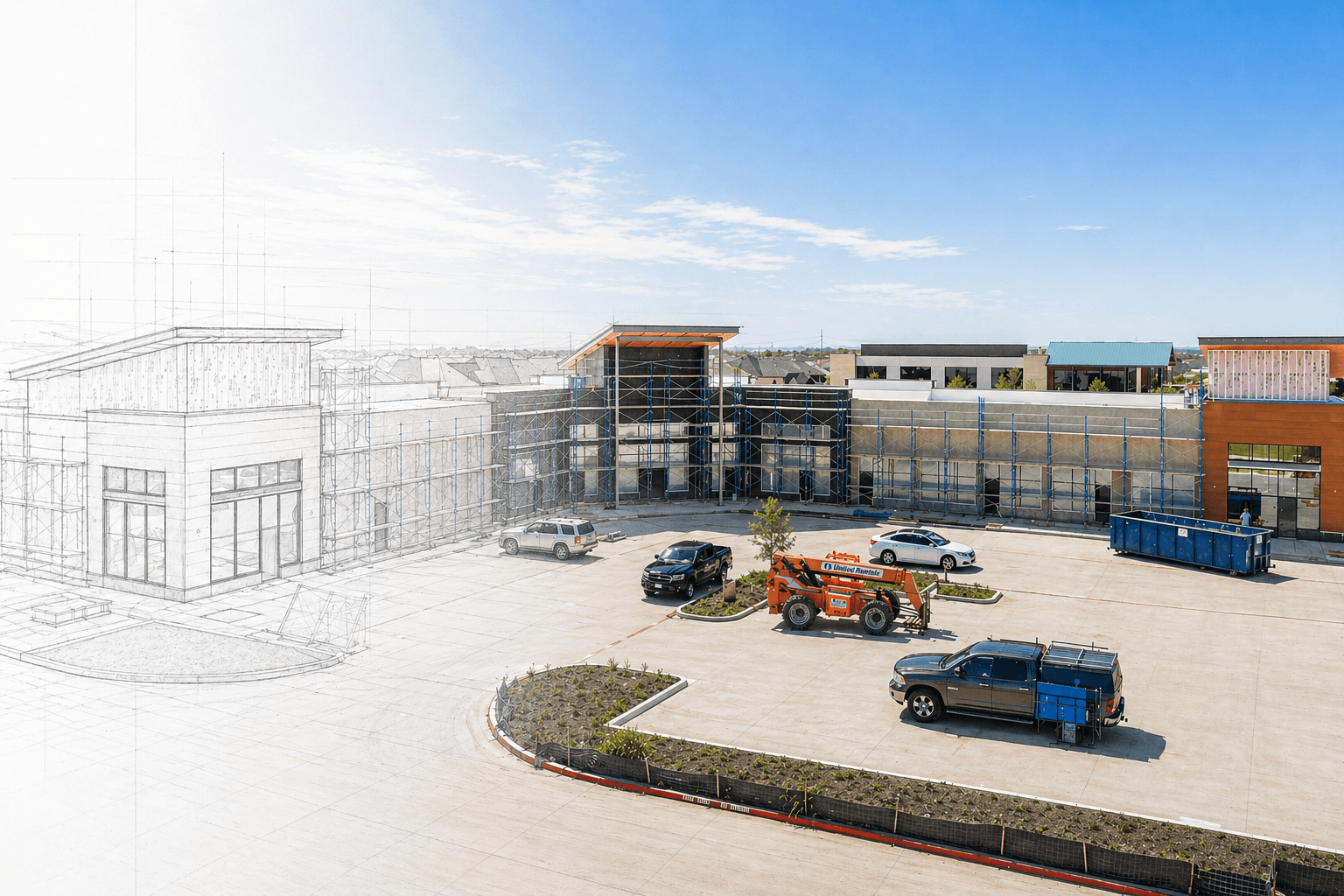

Why Underground Detention Isn't Always the Best Way to Gain More Buildable SQFT
Underground stormwater detention is often viewed as a way to unlock more usable square footage, but the real costs - excavation, haul-off, chambers, piping, and installation - can quickly erode project profitability. Learn when underground systems make sense and when smarter, cost-efficient alternatives deliver better results.
Why Underground Detention Isn't Always the "More SQFT" Solution Everyone Thinks It Is
In land development, stormwater detention is one of the most misunderstood components of site planning especially the belief that underground detention automatically creates more usable square footage. On paper, it often looks like a clean, premium solution. But when you evaluate the true cost, the story can change dramatically.
Recently, our team reviewed a project where the original concept relied heavily on underground detention. The drawings looked promising, but once we analyzed the real-world financial impacts, the numbers told a very different story.
The Hidden Costs of Underground Detention
Underground detention systems require far more than just digging a hole and installing chambers. They involve:
- Deep, precision excavation
- Large-scale soil haul-off
- Engineered underground chambers
- Reinforced piping networks
- Specialized backfill materials
- Complex installation processes
Just the soil haul-off alone added hundreds of thousands of dollars a cost that was not fully reflected in the original preliminary estimate.
Our Approach: Ask the Hard Questions Early
Instead of adopting the initial detention concept, we asked the engineering team to re-evaluate the design with the complete cost picture in mind. This included an analysis of:
- Excavation depth and volume
- Dirt haul-off requirements
- Chamber and pipe costs
- Installation complexity
- Viable alternative detention layouts
- Long-term maintenance considerations
What We Found
The underground system initially assumed to "unlock more buildable SQFT" actually turned into one of the biggest cost drivers of the entire project.
When all direct and indirect costs were factored in, there was no significant financial advantage over more traditional detention solutions. In fact, the total cost dramatically reduced overall project profitability.
When Underground Detention Does Make Sense
It's important to acknowledge that underground detention is not the villain. It is an excellent solution under the right circumstances, such as:
- Dense urban infill developments
- Commercial sites with extremely limited surface area
- Projects with strict aesthetic or zoning constraints
- High-value footprints where surface ponds would eliminate critical buildable space
On these types of sites, the added cost is justified because there's no practical alternative.
Key Takeaways for Developers, Engineers & Investors
- More SQFT does not always equal more profit not when detention costs balloon.
- Underground detention is valuable, but only when site constraints demand it.
- Always evaluate the true total cost, not just conceptual layouts.
- Haul-off is one of the most underestimated expenses in underground systems.
- Smart engineering is not about choosing the most sophisticated option it's about choosing the most financially responsible solution.
Disclaimer: This article is provided for general educational and informational purposes only and does not constitute professional, legal, financial, or engineering advice. While TX Sparks Construction makes every effort to keep this content accurate and current, we make no warranties as to its completeness, accuracy, or reliability. Construction codes, regulations, and requirements vary by location and project and are subject to change. Any action you take based on this information is strictly at your own risk. For guidance specific to your project, please consult a qualified professional or contact our team directly.