
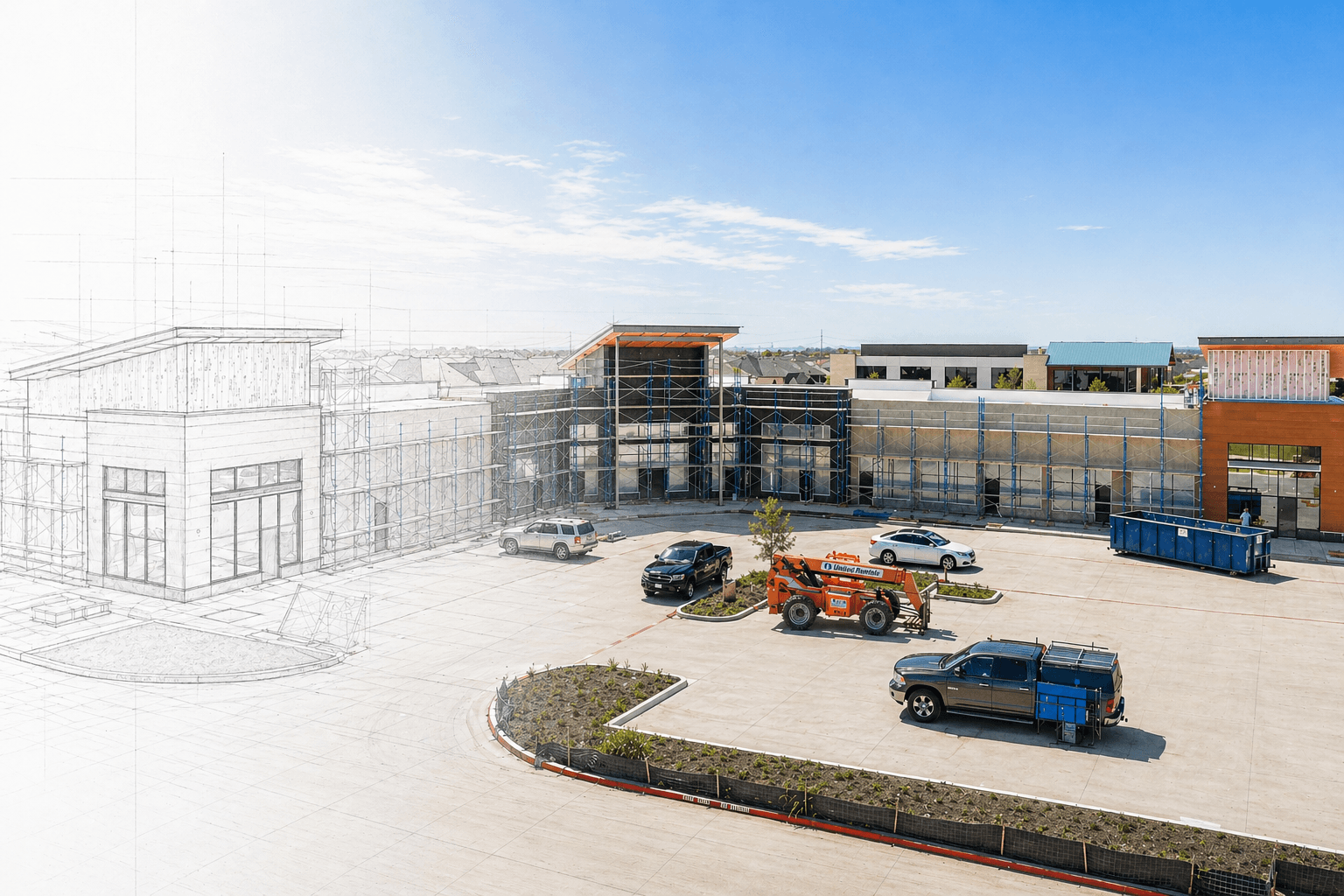

Land Development in Texas: Zoning, Entitlements & Permits Explained
How land development in Texas works, including zoning requirements, entitlements, permitting processes, and key steps for successful project approvals.
Texas continues to be one of the fastest-growing states in the country.
According to recent U.S. Census Bureau data, Texas boasts the largest annual population increase of any state, adding nearly 400,000 residents annually.
This massive influx creates significant opportunities for residential, commercial, industrial, and mixed-use developments.
However, before construction can begin, developers must navigate a complex framework of zoning regulations, land entitlements, and permitting requirements.
Understanding these critical components is essential for avoiding costly delays, maintaining compliance, and ensuring a successful project outcome.
Whether you are a property owner, investor, or developer, the land development process involves much more than purchasing a parcel of land and breaking ground.
Local municipalities have specific regulations governing how land can be used, what types of structures can be built, and what approvals must be obtained before construction begins.
Working with an experienced residential developer in Texas, such as TX Sparks Constructions, can help streamline the process while reducing risk and uncertainty.
What Is Land Development?
Land development is the process of transforming raw, undeveloped, or underutilized land into a site that is suitable for residential, commercial, industrial, or mixed-use construction.
The process typically begins with evaluating the property's feasibility and continues through planning, engineering, entitlement approvals, permitting, infrastructure installation, and ultimately construction.
Successful land development requires coordination among engineers, architects, planners, utility providers, government agencies, and contractors.
Every stage of the process must be carefully managed to ensure the project aligns with local regulations and market demands.
Through its comprehensive land development services, TX Sparks Construction helps clients navigate each phase efficiently while minimizing delays and unexpected costs.
You can also read: 7 Ways to Make a Commercial Construction Project Bankable in Texas.
Understanding Zoning Regulations in Texas
One of the first considerations in any development project is zoning. Zoning regulations determine how a parcel of land can legally be used and developed.
Unlike many states that rely on more centralized planning systems, Texas gives significant authority to local governments, meaning zoning requirements can vary substantially from one city to another.
Notable exceptions also exist; for instance, Houston remains famous for being the largest city in the country without formal zoning ordinances, relying instead on deed restrictions and land-use ordinances.
In standard Texas municipalities, zoning ordinances establish guidelines regarding:
Land use (residential, commercial, industrial, agricultural, or mixed-use)
Building density and Floor Area Ratio (FAR)
Setbacks and height restrictions
Impervious cover limits (critical for Texas stormwater management)
Parking requirements
Before acquiring land or finalizing development plans, it is crucial to verify that the property's zoning classification aligns with the intended use.
If the current zoning does not support the proposed project, additional approvals such as rezoning requests or variances may be required.
What Are Land Entitlements?
Land entitlements refer to the formal approvals obtained from governmental authorities that grant a developer the legal right to move forward with a specific project.
While zoning establishes the baseline rules for land use, entitlements provide permission for a particular development concept.
The entitlement process may involve rezoning applications, conditional use permits (CUP), subdivision platting, site plan reviews, planned development (PD) approvals, and other municipal authorizations.
These approvals help ensure that proposed developments align with community planning objectives, infrastructure capacity, environmental requirements, and public safety standards.
Obtaining entitlements can be one of the most challenging and time-consuming aspects of land development.
It often requires collaboration with planning departments, engineering consultants, municipal boards, and local stakeholders.
Partnering with a specialized team for land entitlement services in Texas ensures that your submittals are technically sound, accelerating the path to project kickoff.
You can also read: What Is Land Entitlement and Why It Matters for Your Construction Project.
The Entitlement Process in Texas
Although the specific process varies by municipality, most entitlement approvals follow a similar path.
Developers typically begin with a feasibility analysis to assess zoning compliance, utility availability, environmental considerations, drainage requirements, and overall project viability.
Once the project's feasibility has been established, preliminary site plans and development concepts are prepared for municipal review.
Local planning staff evaluate the proposal and may request revisions before forwarding it to planning commissions, zoning boards, or city councils for consideration.
In some cases, public hearings are required, giving community members an opportunity to provide feedback on the proposed development.
Following approval, developers can proceed with detailed engineering, permitting, and construction planning.
The entitlement phase is often where project schedules are won or lost. In Texas, state laws govern platting timelines.
Under Texas Local Government Code Chapter 212 (strengthened by recent legislative updates like House Bill 14), municipalities face strict 30-day shot clocks to approve or disapprove plats and plans once submitted.
However, complex projects with extensive feedback cycles can still experience prolonged pre-development phases.
Proper preparation, accurate documentation, and proactive communication with regulatory agencies are vital to keep these statutory clocks ticking in your favor.
Understanding Development Permits
While entitlements determine whether a project can move forward, permits authorize specific construction activities.
Development permits ensure that projects comply with local building codes (such as the International Building Code, or IBC), engineering standards, environmental regulations, and public safety requirements.
Depending on the project scope and location, developers may need:
Site Development Permits (SDP): Approving the overall civil layout, grading, and drainage.
Grading and Clearing Permits: Allowing initial dirt work to begin.
Utility Permits: To connect to municipal water, wastewater, and electric grids.
Stormwater Management Permits: Incorporating Stormwater Pollution Prevention Plans (SWPPP) in compliance with the Texas Commission on Environmental Quality (TCEQ).
Building Permits: Commercial, structural, electrical, mechanical, and plumbing authorizations.
Permitting requirements vary throughout Texas, making it essential to understand local procedures and submission standards.
Delays often occur when applications are incomplete or fail to meet jurisdictional requirements.
Experienced commercial developers in Texas can help coordinate permit submissions and maintain communication with review agencies to keep projects moving forward.
You can also read: 5 Steps to Reduce Construction Delays in North Texas Projects.
4 Common Challenges During Land Development
Even well-planned projects can encounter challenges during the zoning, entitlement, and permitting process.
Developers frequently face issues related to:
Utility Capacity Limitations: Outdated municipal infrastructure failing to meet the demands of high-density or commercial assets.
Environmental Restrictions: Navigating protected habitats (such as the Edwards Aquifer contributing zones in Central Texas) or federally protected wetlands.
Drainage and Floodplain Concerns: Meeting stringent Texas regional drainage criteria to prevent downstream flooding.
Community Opposition: "NIMBY" (Not In My Backyard) pushback during public hearings for rezoning or high-density housing.
These challenges highlight the importance of conducting thorough due diligence before making significant financial commitments.
Identifying potential obstacles early allows project teams to develop solutions before they affect budgets or timelines.
You can also read: Starting a Commercial Build in DFW: 8 Things You Should Know.
How TX Sparks Constructions Helps in Land Development in Texas
Navigating Texas land development regulations requires experience, technical expertise, and a thorough understanding of local approval processes.
TX Sparks Constructions provides comprehensive, end-to-end support throughout the development lifecycle, helping clients move efficiently from feasibility analysis and entitlement approvals to permitting, infrastructure installation, and final construction.
By combining strategic planning, municipal coordination, and premier construction expertise, we help developers reduce risk, accelerate project timelines, and maximize investment value.
Whether your project involves master-planned residential communities, commercial retail centers, massive industrial facilities, or modern mixed-use projects, having the right partner can make the difference between an expensive delay and a highly profitable asset.
Ready to unlock the true potential of your Texas real estate investment?
Contact us today to schedule a consultation for your next land development project.
You can also read: 6 Steps to Select the Right General Contractor for Your Commercial Project.
Conclusion
Navigating the land development framework in Texas is highly lucrative, but it requires balancing strict local ordinances, state environmental mandates, and rigorous technical guidelines.
A single oversight during the zoning verification or utility permitting phase can delay a project by months and balloon your holding costs.
To succeed in the competitive Texas real estate market, developers need more than just a vision; they need an experienced ally who knows how municipal boards operate and how Texas construction laws apply on the ground.
Frequently Asked Questions
1. How long does the land entitlement process take in Texas?
The timeline depends heavily on the municipality, project size, and approval requirements. While minor subdivision platting can be resolved within 30 to 60 days due to state shot-clock laws, complex projects requiring full rezoning or Planned Development (PD) approvals typically take six to twelve months.
2. What is the difference between zoning and entitlements?
Zoning is a broad municipal law establishing how land can generally be used within specific districts (e.g., commercial vs. single-family residential). Entitlements are project-specific legal approvals granted by a city or county that authorize a developer to proceed with a highly detailed, concrete development plan.
3. Can construction begin after entitlement approval?
No. Entitlement approvals give you the legal right to develop the concept, but you must still clear engineering reviews and obtain specific site development and building permits before heavy machinery breaks ground.
4. Why is professional land development management important?
Professional development management helps identify regulatory, environmental, and infrastructure risks before you close on a property. Working with a general contractor in Texas, like TX Sparks Construction, streamlines approvals, improves communication with city officials, prevents costly design revisions, and ensures code compliance throughout the entire construction process.