
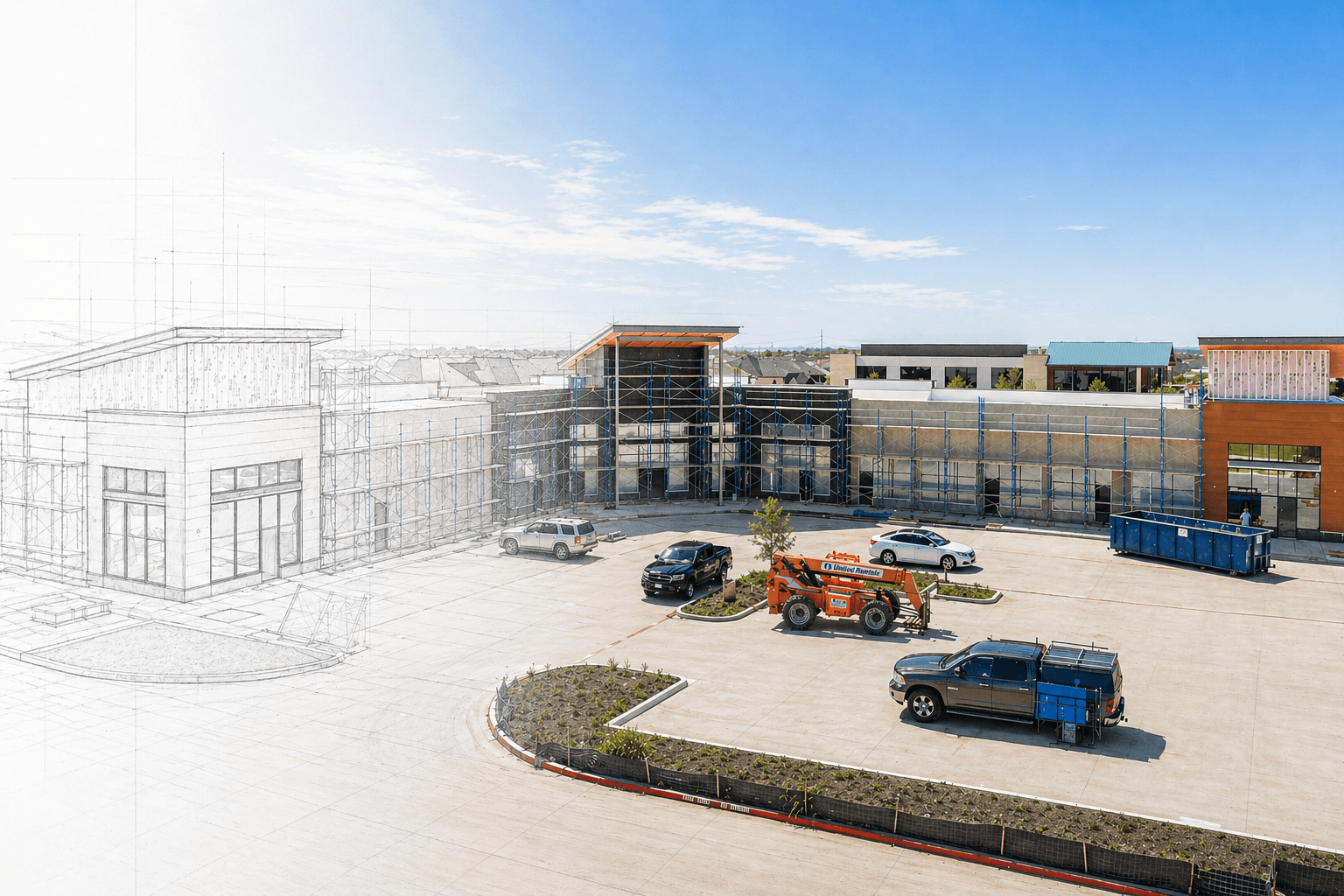

LGS Framing vs. Wood Framing in Commercial Buildings: A Texas Guide
Compare LGS and wood framing for commercial buildings in Texas, including cost, durability, fire resistance, maintenance, and long-term performance.
We often receive calls from real estate developers and first-time investors asking about the difference between metal framing (Light Gauge Steel - LGS) and wood framing for commercial and office buildings.
Many projects today use structural steel columns and beams as the main skeleton, while the interior and exterior walls are built using either LGS studs or traditional wood framing.
This blog provides a high-level, practical comparison of both options from a Texas general contractor's perspective.
The goal is to help owners, investors, and architects understand the advantages and limitations of each system before making design and budgeting decisions.
This information is shared purely for educational purposes. The final decision should always depend on budget, architectural design, fire rating requirements, and long-term ownership strategy.
LGS Framing vs Wood Framing on Steel Columns & Beams
1. Light Gauge Steel (LGS) Framing - Pros
LGS framing is non-combustible and offers superior fire resistance, a major safety benefit for commercial buildings.
Steel studs are fully resistant to termites, mold, and rot, making them ideal for Texas climate conditions.
The material provides high dimensional accuracy and does not warp, shrink, or twist over time.
Panels can be pre-engineered and fabricated off-site, allowing faster and predictable installation.
LGS works seamlessly with steel columns and beams, especially for large spans and taller walls.
The system is lighter in weight, reducing load on foundations in multi-story projects.
Factory manufacturing ensures consistent quality and fewer on-site errors.
2. Light Gauge Steel (LGS) Framing - Cons
The initial material cost is typically higher than wood framing.
Installation requires specialized crews with LGS experience.
Thermal bridging must be addressed through proper insulation design.
On-site changes are more difficult than modifying wood studs.
MEP coordination must be planned in advance before fabrication.
3. Wood Framing on Steel Structure - Pros
Wood framing usually has a lower upfront cost in Texas markets.
There is abundant skilled labor familiar with wood construction.
Field modifications are quick and easy during construction.
Wood offers better natural thermal performance with less bridging.
It suits low-rise commercial and retail interiors effectively.
Inspectors and subcontractors are highly accustomed to wood systems.
4. Wood Framing - Cons
Wood is combustible and provides lower fire resistance unless treated.
It is vulnerable to termites, moisture, and rot if not detailed correctly.
Warping and shrinkage can cause drywall cracks over time.
It is less effective for large commercial spans or tall walls.
Insurance premiums may be higher for wood-based structures.
When LGS Framing for Commercial Building is the Better Choice
Multi-story commercial and mixed-use developments.
Hospitals, medical offices, schools, and senior living facilities.
Projects requiring higher fire ratings and long-term durability.
Build-to-Rent and multifamily communities with repetitive layouts.
Long-term hold assets where maintenance must be minimal.
When Wood Framing for Commercial Building Makes More Sense
Single-story retail or small office buildings.
Budget-sensitive developments.
Fast tenant improvement (TI) projects.
Markets with readily available wood framing crews.
Short-term investment or flip strategies.
Cost Perspective in Texas: LGS Vs. Wood Framing for Commercial Building
LGS framing generally runs 10-20% higher in initial framing cost.
Wood framing is cheaper upfront but may carry higher long-term maintenance.
Insurance, durability, and lifecycle costs should be part of total project analysis.
Final Thoughts from TX Sparks Construction
For commercial buildings that already use steel columns and beams, the choice between LGS and wood framing is less about "right or wrong" and more about project goals: fire safety, speed, long-term ownership, and budget.
At TX Sparks Construction, we evaluate every project based on:
Building type and occupancy
Fire code requirements
Schedule constraints
Lifecycle cost
Investor exit strategy
If you are planning a commercial, office, or multifamily project in Texas and want guidance on LGS vs wood framing, our team can help analyze the best approach for your specific development.
Disclaimer: This article is provided for general educational and informational purposes only and does not constitute professional, legal, financial, or engineering advice. While TX Sparks Construction makes every effort to keep this content accurate and current, we make no warranties as to its completeness, accuracy, or reliability. Construction codes, regulations, and requirements vary by location and project and are subject to change. Any action you take based on this information is strictly at your own risk. For guidance specific to your project, please consult a qualified professional or contact our team directly.