
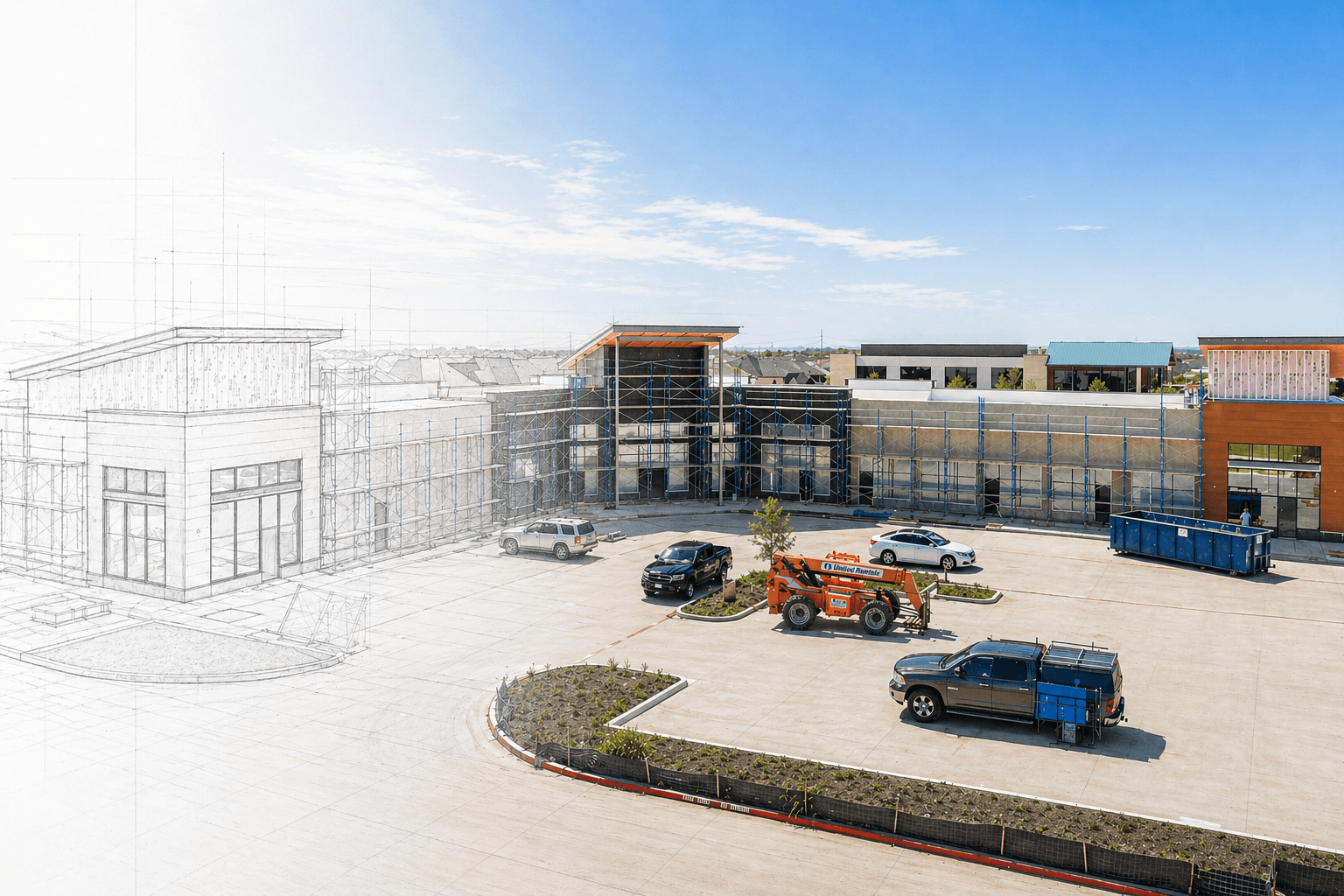

Mastering Commercial Projects: A Step-by-Step Guide
Discover the key phases of commercial project success with TX Sparks Construction. Expert insights for seamless project execution.
Navigating the Phases of a Successful Commercial Real Estate Project
1. Location:
Prime Location: Identifying the right location is often the cornerstone of a successful project. It should not only be strategically located but also equipped with essential utilities such as water, sewer, and electricity.
Visibility and Accessibility: A prime location should offer good visibility from main roads and easy accessibility for both customers and suppliers.
Traffic and Footfall: Analyzing traffic patterns and estimating daily footfall is crucial, especially for commercial ventures. A location with a significant flow of potential customers can be a game-changer.
2. Feasibility:
Thorough Evaluation: Before purchasing the property, conduct a comprehensive feasibility study. This involves examining various factors, including:
Surveys: Reviewing land surveys to understand property boundaries and dimensions is the crucial step.
Easements: Identifying any easements that may affect land use.
Deed Restrictions: Analyzing deed restrictions that could limit development options.
Utility Access: Ensuring adequate access to essential utilities like water, sewer, and electricity.
Soil Conditions: Assessing soil conditions to determine any potential challenges.
Environmental Studies: Investigating whether Phase 1 or Phase 2 environmental studies are required.
Market Research: Analyzing sales and lease comparisons to gauge market demand.
Zoning Requirements: Understanding local zoning regulations and requirements is a must.
3. Design & Entitlements:
Hiring the Right Team: Engage skilled professionals, including civil engineers and architects, who have a deep understanding of your project's requirements, budget constraints, and timelines.
Clear Communication: Effective communication is crucial. Developers must clearly convey their vision, budget, requirements, and any specific architectural elements.
Early Involvement of General Contractor: Consider involving the General Contractor during the design phase to ensure designs are cost-effective and construction-friendly.
Relationship with Local Authorities: Establish a strong relationship with city or county authorities to facilitate the entitlement process.
4. Choosing the Right General Contractor:
Selecting the Best Fit: This is a pivotal step. Prioritize experience and expertise over cost when selecting a General Contractor.
Past Work Evaluation: Review their portfolio and assess their past projects to ensure they align with your project's scale and complexity.
5. Construction Phase:
Groundbreaking Ceremony: The construction phase officially begins with a groundbreaking ceremony, marking the commencement of physical work on the site.
Construction Management: Dedicated project managers oversee construction, ensuring adherence to timelines, budgets, and quality standards.
Quality Control and Inspections: Regular inspections and quality control measures are implemented to maintain construction standards.
Real Estate Broker Engagement: Engage a real estate broker with strong connections relevant to your project type to initiate sales or leasing.
Project Updates and Reporting: Developers and investors receive regular updates on the project's progress, ensuring transparency and informed decision-making.
6. Choose the Right Title Company:
Early Selection: Choose the correct title company during the construction phase itself. Set clear instructions and guidelines regarding future closings to streamline the process.
7. Post Construction:
Setting Up By-Laws: If the project includes shared spaces or facilities, establish by-laws that govern their use and maintenance.
Leases and Sales Review: Review all leases and sales agreements, ensuring they align with the project's goals.
Negotiating with Tenants and Buyers: Address any concerns or negotiations with tenants or buyers promptly and professionally.
Property Management: Engage a property management company experienced in handling commercial real estate projects. They can help minimize ongoing maintenance and repair expenses.
Insurance: Ensure the property has the right insurance coverage, especially for aspects like roof and exterior building maintenance.
This comprehensive approach to managing the life cycle of a commercial ground-up project maximizes the chances of success in the competitive real estate market.
Disclaimer: This article is provided for general educational and informational purposes only and does not constitute professional, legal, financial, or engineering advice. While TX Sparks Construction makes every effort to keep this content accurate and current, we make no warranties as to its completeness, accuracy, or reliability. Construction codes, regulations, and requirements vary by location and project and are subject to change. Any action you take based on this information is strictly at your own risk. For guidance specific to your project, please consult a qualified professional or contact our team directly.