
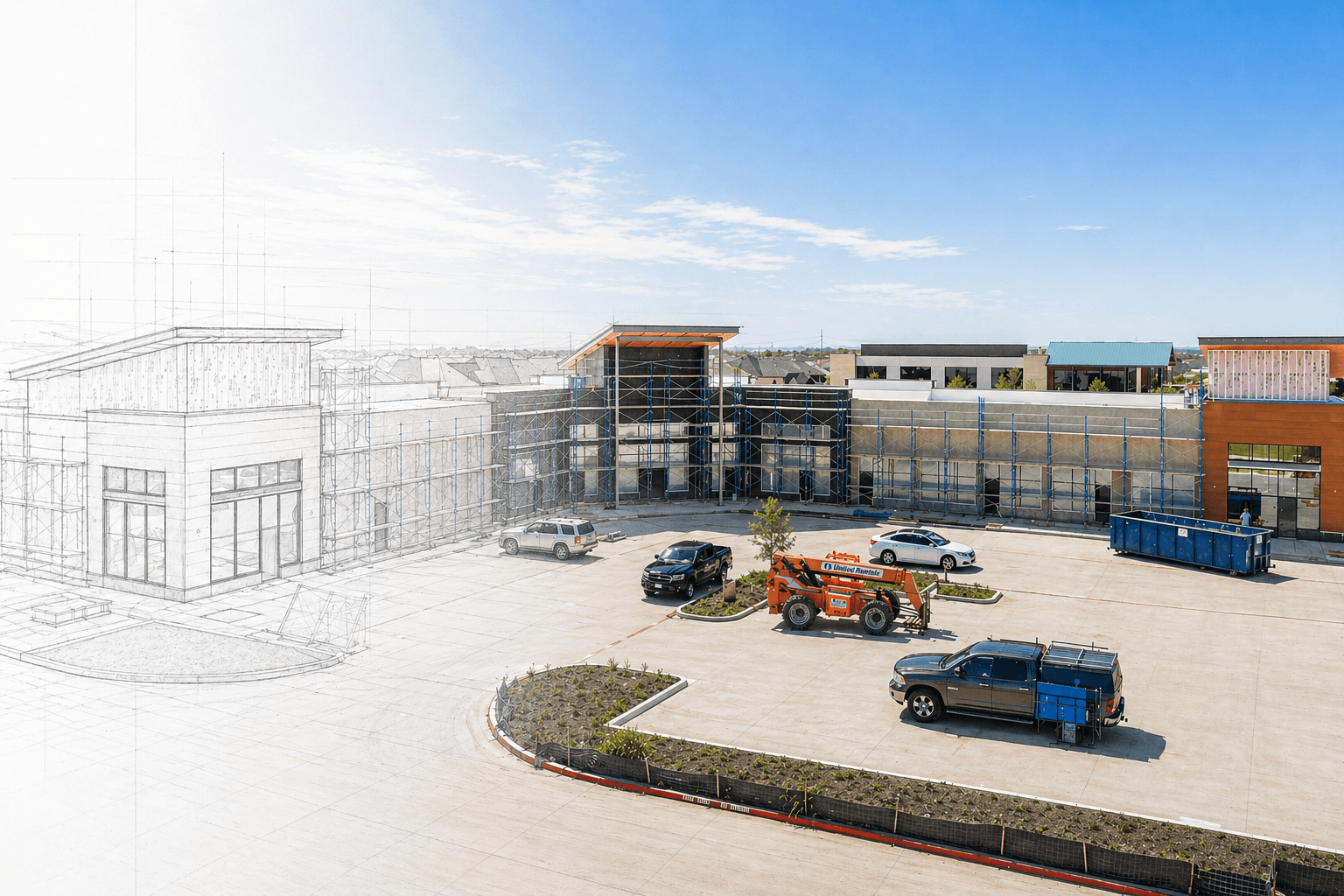

How Civil Engineering & Site Planning Impact Project ROI in Texas
Civil engineering and site planning improve project ROI in Texas by reducing costs, minimizing risks, accelerating approvals, and maximizing land value.
Texas is building at a pace few states can match.
The construction industry here generates hundreds of billions of dollars a year, and with the state's population on track to reach 42.6 million over the years, that growth isn't slowing down anytime soon.
For developers, builders, and investors, this boom looks like an opportunity.
But here's the catch: not every project that breaks ground actually delivers the returns it promised on paper.
More often than not, the difference between a project that hits its numbers and one that bleeds money comes down to decisions made long before the first shovel hits the dirt. That's where civil engineering and site planning come in.
They're not just regulatory checkboxes or technical formalities; they're the foundation (literally and financially) that your entire ROI is built on.
Let's break down why this matters so much in Texas specifically and what smart site planning actually does for your bottom line.
The Hidden Cost of Skipping Good Site Planning
Here's a number that should make any commercial developer in Texas pause: according to research from the Construction Industry Institute, the cost of fixing an error multiplies roughly tenfold at every project phase.
A mistake that costs $100 to correct during design becomes a $1,000 problem during construction, and a $10,000 headache after the building is occupied.
That's not a minor inefficiency. That's the difference between a healthy margin and a project that quietly underperforms for years.
This pattern shows up industry-wide, too.
Studies consistently find that rework, fixing things that should have been done right the first time, eats up somewhere between 5% and 12% of total project costs, and design-related errors alone account for a significant chunk of that.
Nationally, rework is estimated to cost the construction industry more than $31 billion every year.
Most of that traces back to problems that surface in construction documents: missing details, uncoordinated systems, and decisions made too late to be cheap.
In other words, the earlier civil engineers get involved, surveying the land, modeling drainage, testing soil, and mapping utilities, the more expensive mistakes they catch before they become expensive mistakes.
You can also read: How Long Does a Commercial Interior Build-Out Take in Texas?
Why Texas Sites Are Trickier Than They Look
Every state has its own site planning quirks, but Texas brings a few that hit project budgets especially hard.
Expansive Clay Soils
Much of North and Central Texas, including the Dallas-Fort Worth metro and large stretches of Austin, sits on Blackland Prairie clay, a soil type that can swell and shrink dramatically with changes in moisture.
Data has pointed out that expansive soils cause more financial damage to U.S. structures than earthquakes, floods, hurricanes, and tornadoes combined, with nationwide losses estimated at above $15 billion a year.
In Texas specifically, foundation repairs tied to clay movement typically run anywhere from $4,500 to $18,000, with DFW averaging around $12,000 due to particularly severe soil conditions.
A proper geotechnical investigation before design locks in the right foundation system from day one, instead of forcing an expensive retrofit five years later.
This is precisely the work covered in a thorough land feasibility study, evaluating soil, drainage, and physical site constraints before a single design dollar is spent.
Flooding and Stormwater Demands
Texas's 2024 State Flood Plan, the state's first comprehensive look at flood risk, identified $54.5 billion in needed mitigation projects statewide, with roughly one in six Texans living or working in a flood-prone area.
The deadly July 2025 floods in the Hill Country, which caused over $1.1 billion in damage, were a stark reminder of how unforgiving Texas weather can be when drainage infrastructure hasn't kept pace with growth.
For developers, this translates directly into site planning requirements: detention ponds, permeable surfaces, and grading strategies that satisfy local floodplain ordinances aren't optional extras; they're what keep a project insurable, sellable, and standing after the next storm.
In many growth corridors, this is also where MUD and PID services come into play, since these districts are often what finance and govern the drainage and utility infrastructure that a new development depends on.
Infrastructure Racing to Keep Up With Growth
Texas added roughly 30,100 construction jobs between January 2025 and January 2026 alone, the largest numeric gain of any state in the country.
That kind of growth strains roads, water lines, and power grids, particularly in fast-growing corridors like Dallas-Fort Worth, Austin, San Antonio, and Houston.
A site that looks perfectly buildable on paper can still run into capacity limits on utilities or access roads that weren't designed for today's density.
Civil engineers who understand local infrastructure capacity can flag these constraints early, before they turn into change orders or, worse, a stalled project.
You can also read: 5 Steps to Reduce Construction Delays in North Texas Projects.
Where Site Planning Directly Protects Your ROI
So how does good civil engineering actually translate into dollars saved or earned? A few ways stand out.
Smarter Entitlement and Permitting Strategy
Regulatory costs aren't trivial.
Nationally, government regulation now adds an average of $131,734 to the cost of a typical new single-family home, about 26% of the sale price, and for multifamily developments, regulations account for an average of 40.6% of total development costs.
On top of that, more than 94% of developers report that regulatory compliance causes project delays, averaging around seven months in some cases.
Every month of delay carries real financing costs, too; on a typical multifamily land deal, each month can add roughly $11,500 in interest alone.
An experienced civil engineering team that knows Texas jurisdictions, and which ones move fast versus which ones don't, can shave months off this timeline simply by getting site plans, drainage studies, and utility coordination right the first time.
Strong land entitlement work paired with proactive design and permitting is what turns a multi-month approval gauntlet into a manageable, predictable process.
You can also read: What Is Land Entitlement and Why It Matters for Your Construction Project.
Site Layout that Maximizes Usable Land
Good site planning isn't just about avoiding problems; it's about getting more value out of the same parcel.
Thoughtful grading, efficient parking and circulation design, and smart placement of buildings relative to slope and drainage can increase usable square footage, reduce earthwork costs, and improve a property's long-term marketability, all without buying an extra acre of land.
This is the core promise of disciplined land development: infrastructure and layout decisions made with foresight, not guesswork.
Fewer Surprises During Construction
When civil engineers do thorough due diligence upfront, topographic surveys, soil borings, utility locates, and environmental assessments, contractors aren't discovering problems mid-build.
That predictability keeps schedules on track, which keeps financing costs in check, which protects your projected return.
It's also why construction management works best when it starts long before vertical construction, coordinating budgets, schedules, and stakeholders from the site planning phase onward.
Long-Term Asset Performance
Sites engineered with proper drainage, soil-appropriate foundations, and resilient infrastructure hold their value better over time.
Buyers, lenders, and insurers increasingly factor flood risk and structural history into valuations, so a well-engineered site isn't just cheaper to build; it's worth more to sell or refinance down the road.
You can also read: 10 Steps to Evaluate a Raw Land Deal Before You Close in Texas.
How TX Sparks Construction Brings It All Together
This is exactly where a lot of Texas projects go wrong: commercial or residential developers in Texas hire a civil engineer for the site plan, a separate firm for entitlements, another for permitting, and a general contractor who only shows up once the dirt work is done.
Every handoff between those parties is a chance for information to get lost, and, as we've seen, every lost detail can multiply tenfold in cost by the time it surfaces on-site.
TX Sparks Construction was built to close those gaps.
As a Texas-based construction partner, TX Sparks Construction manages the full lifecycle of a project under one contract, starting well before vertical construction begins:
Land Feasibility - evaluating soil conditions, regulatory constraints, infrastructure access, and financial viability before you commit to a site.
Land Entitlement - navigating zoning and approvals so your project isn't stalled waiting on a municipality.
MUD & PID Services - structuring the districts that often fund the drainage and utility infrastructure your site needs.
Design and Permitting - keeping plans buildable, compliant, and aligned with your budget and timeline.
Land Development and Ground-Up Construction - turning approved plans into stable, well-engineered infrastructure and structures.
Construction Management - single-point accountability across budget, schedule, and quality, from pre-construction through close-out.
Because one team carries the project from land evaluation through final delivery, the costly disconnects that usually happen between site planning and construction simply don't have room to occur.
You can see examples of this approach across TX Sparks Construction's commercial and residential work throughout Dallas-Fort Worth and beyond, and browse completed work in their project portfolio.
You can also read: 6 Steps to Select the Right General Contractor for Your Commercial Project.
What This Means for Your Next Texas Project
If there's one takeaway here, it's this: civil engineering and site planning aren't costs to minimize; they're investments that pay for themselves many times over.
A few thousand dollars spent on geotechnical testing or a detailed drainage study upfront can prevent six-figure problems later.
Given how much Texas's growth, soil conditions, and flood risk all stack the deck against poorly planned sites, skipping this step isn't really saving money; it's just deferring a much larger bill.
When you're evaluating a site or vetting an engineering partner, look for a team with real Texas-specific experience: familiarity with local soil behavior, established relationships with regional permitting offices, and a track record of catching issues before they hit the budget.
That local knowledge is often the single biggest lever you have for protecting and improving your project's ROI.
Texas isn't short on opportunity. The projects that win aren't necessarily the ones that move fastest out of the gate; they're the ones built on a site plan that actually accounts for the ground beneath it.
Ready to Build on Solid Ground?
If you're evaluating land or sitting on a project that's stalled in planning, don't wait for a soil report or a drainage problem to tell you what could have been caught months ago.
TX Sparks Construction brings civil engineering, site planning, and construction under one roof and one contract, so your project stays on budget and on schedule from the very first site visit.
Book a free consultation with the TX Sparks Construction team, or call (469) 598-2558 to talk through your site before you break ground.
Disclaimer: This article is provided for general educational and informational purposes only and does not constitute professional, legal, financial, or engineering advice. While TX Sparks Construction makes every effort to keep this content accurate and current, we make no warranties as to its completeness, accuracy, or reliability. Construction codes, regulations, and requirements vary by location and project and are subject to change. Any action you take based on this information is strictly at your own risk. For guidance specific to your project, please consult a qualified professional or contact our team directly.