
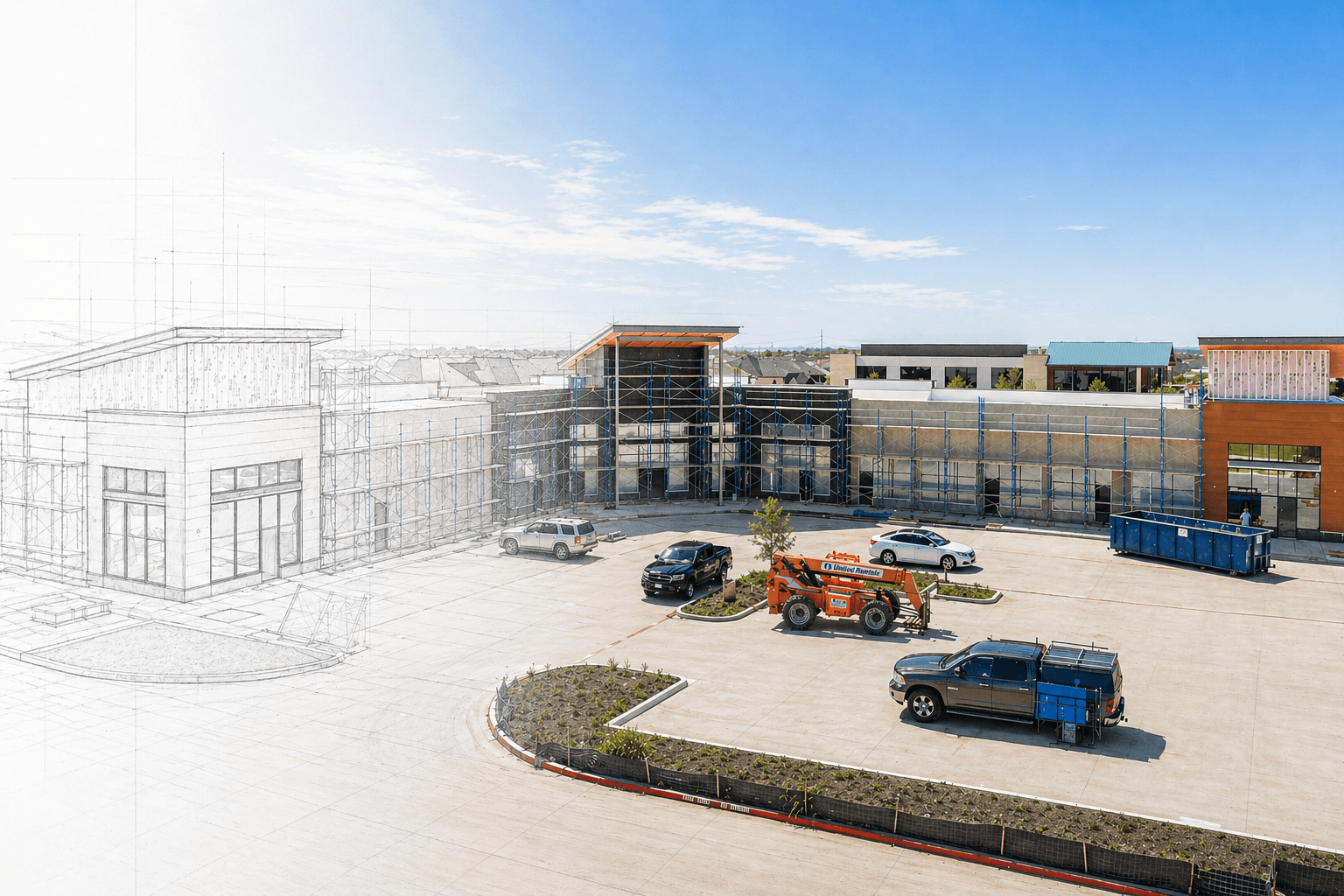

8-Step Ground-Up Construction Process in Texas
Learn the ground-up construction process in Texas, from site selection and permitting to construction, inspections, and project completion.
Whether you're developing a commercial property, custom home, medical office, retail center, or mixed-use project, understanding the ground-up construction process in Texas is essential for keeping your project on schedule and within budget.
Ground-up construction involves building a structure from an undeveloped site, requiring careful planning, engineering, permitting, and execution.
At TX Sparks Construction, every project is managed through an integrated design-build approach that combines land feasibility, design, permitting, construction, and project management under one experienced team.
This streamlined process helps clients reduce delays, improve communication, and achieve better long-term value.
What Is Ground-up Construction?
Ground-up construction refers to constructing a building from scratch on vacant or redeveloped land.
Unlike renovation or tenant improvements, every aspect of the project, from site preparation to the final inspection, is planned and executed as part of a new development.
Ground-up construction is commonly used for:
Commercial office buildings
Retail centers
Educational facilities
Medical offices
Industrial buildings
Custom homes
Multi-family developments
Because every project starts with a blank canvas, success depends on proper planning before construction even begins.
You can also read: Starting a Commercial Build in DFW: 8 Things You Should Know.
Step 1: Land Feasibility and Site Evaluation
Every successful project begins with determining whether the land is suitable for development.
During the land feasibility stage, construction professionals evaluate zoning regulations, utility availability, soil conditions, floodplain considerations, environmental constraints, and access to roads and infrastructure.
Identifying these factors early helps minimize unexpected costs, reduce project risks, and create a realistic development plan before construction starts.
Step 2: Design, Engineering, and Permitting
Once the site has been evaluated, architects and engineers prepare detailed construction plans that align with the project's objectives and comply with local building codes.
This stage includes architectural design, structural engineering, civil engineering, and mechanical, electrical, and plumbing (MEP) planning.
Permit applications are also submitted to the appropriate local authorities to ensure the project meets all regulatory requirements before construction begins.
You can also read: How Civil Engineering & Site Planning Impact Project ROI in Texas.
Step 3: Land Development and Site Preparation
After permits are approved, the property is prepared for construction.
Site preparation typically includes clearing vegetation, grading the land, excavating, installing utilities, implementing stormwater management systems, improving road access, and establishing erosion control measures.
Moreover, proper land development creates a stable foundation for the building while helping prevent costly construction issues later in the project.
You can also read: Land Development in Texas: Zoning, Entitlements & Permits Explained.
Step 4: Foundation Construction
With the site prepared, construction crews begin installing the building's foundation.
Depending on the project's design and soil conditions, this may involve slab-on-grade foundations, reinforced concrete systems, deep foundations, or pier-and-beam construction.
Since the foundation supports the entire structure, precision and quality control during this phase are critical to ensuring long-term structural integrity.
Step 5: Structural Framing
Once the foundation is complete, the structural framework begins to take shape.
Contractors install steel or wood framing, structural supports, roof systems, and exterior wall components in accordance with the approved engineering plans.
Throughout this stage, inspections are conducted to verify compliance with Texas building codes and ensure the structure meets all safety requirements.
You can also read: 5 Steps to Reduce Construction Delays in North Texas Projects.
Step 6: Mechanical, Electrical, and Plumbing Installation
After framing is complete, specialized contractors install the building's essential systems.
This includes heating and cooling equipment, electrical wiring, plumbing systems, fire protection, and communication infrastructure.
Proper coordination between these trades is essential to avoid conflicts, reduce delays, and ensure all systems function efficiently once the building is occupied.
Step 7: Interior and Exterior Finishes
As the building nears completion, crews focus on the finishing touches that improve both functionality and appearance.
This stage includes installing drywall, flooring, ceiling systems, doors, windows, painting, exterior cladding, and landscaping.
High-quality workmanship during the finishing phase contributes significantly to the building's durability, aesthetics, and overall value.
Step 8: Final Inspections and Project Handover
Before the building can be occupied, local authorities perform final inspections to confirm that the project complies with approved plans and applicable building codes.
After receiving the necessary approvals, the contractor conducts final quality checks, prepares project documentation, and coordinates a smooth handover to the owner.
This marks the successful completion of the ground-up construction process.
You can also read: 8 Ways to Deliver a Commercial Building with Zero Change Orders.
Why Choosing the Right Construction Partner Matters
Ground-up construction in Texas involves multiple disciplines, stakeholders, and regulatory requirements.
Working with an experienced design-build contractor can simplify the entire process by providing a single point of accountability.
TX Sparks Construction specializes in both commercial and residential ground-up construction across Texas, offering services that include:
Design and permitting
Land development
Ground-up construction
Its integrated approach emphasizes transparency, centralized communication, technology-driven project management, sustainability, and on-time delivery to help clients successfully move from concept to completion.
You can also read: 6 Steps to Select the Right General Contractor for Your Commercial Project.
Conclusion
Ground-up construction is much more than simply building a structure; it is a carefully managed process that begins with strategic planning and ends with the delivery of a high-quality building designed to serve its community for years to come.
Whether you're planning a commercial development, healthcare facility, retail center, educational building, or custom home, partnering with an experienced Texas construction company can make the difference between costly delays and a successful project.
Ready to Build in Texas?
If you're planning a ground-up construction project, let the experienced team at TX Sparks Construction help bring your vision to life. From land evaluation and permitting to construction management and final delivery, you'll have a trusted partner every step of the way.
Contact us today or call us at +1 (469) 598-2558 to schedule your consultation and start building with confidence.
Frequently Asked Questions
1. What is ground-up construction?
Ground-up construction is the process of building a new structure on undeveloped or cleared land, from site preparation to final occupancy.
2. How long does a ground-up construction project take in Texas?
Project timelines vary depending on size, permitting, design complexity, and weather. Proper pre-construction planning helps reduce delays.
3. Why are permits important in Texas construction?
Permits ensure that construction complies with local building codes, safety standards, zoning regulations, and environmental requirements.
4. What are the benefits of using a design-build contractor?
A design-build contractor in Texas manages planning, design, permitting, and construction as a single team, improving communication, reducing risk, and streamlining project delivery.
Disclaimer: This article is provided for general educational and informational purposes only and does not constitute professional, legal, financial, or engineering advice. While TX Sparks Construction makes every effort to keep this content accurate and current, we make no warranties as to its completeness, accuracy, or reliability. Construction codes, regulations, and requirements vary by location and project and are subject to change. Any action you take based on this information is strictly at your own risk. For guidance specific to your project, please consult a qualified professional or contact our team directly.